
Casino Complaints and Customer Funds Protection
 Available in GB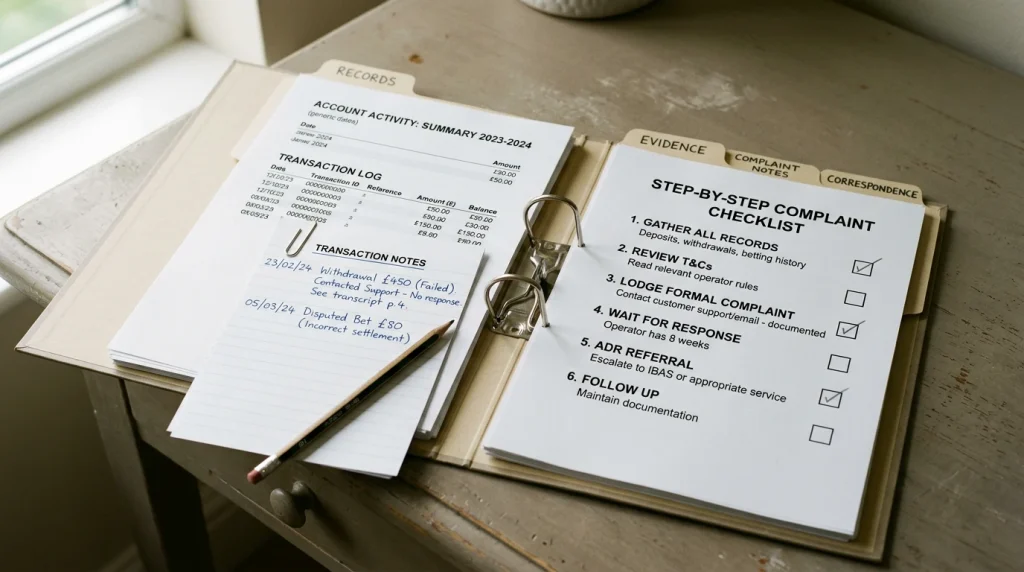
A gambling complaint is stressful because it usually appears when money, account access or trust is already under pressure. A withdrawal may be delayed. An account may be closed. A bonus condition may be disputed. A balance may sit with a business you no longer trust. At that point, the useful task is to organise facts, follow the complaint route and understand what each official body can and cannot do.
This page does not promise refunds, give legal advice or decide whether a particular operator is right or wrong. It explains the broad UK route: complain to the business first, understand when Alternative Dispute Resolution may apply, recognise the limits of the Gambling Commission in individual disputes, and read customer-funds information before assuming money is protected if a business fails.
Many disputes can be avoided by fully understanding the payment and ID check requirements set by offshore operators.
Initiating the Business Complaint Process
The official route begins with the gambling business. That means using the operator’s complaint process, setting out the issue clearly and keeping a record of what you send. A strong complaint is not a long emotional argument; it is a dated summary of the problem, the account or transaction details, the term or communication involved, and the outcome you are asking the business to consider.
Keep copies of account history, transaction records, withdrawal requests, bonus terms that were active at the time, identity-check messages, deposit and withdrawal balances, and any chat or email support exchange. If a rule changed after you acted, keep evidence of the version you relied on. If the complaint concerns a blocked withdrawal, separate the facts: what amount is deposit money, what amount is winnings, whether a bonus was involved, and what reason the business gave.
Do not assume that the regulator can step in immediately for a personal payout dispute. Following the operator process first matters because later escalation depends on what has already been raised and how the business responded.
The complaint route in plain steps
- Write down the issue in one sentence. Examples include a delayed withdrawal, an account closure, a disputed bonus condition or a balance problem. Keep it factual.
- Collect the account evidence. Save transaction history, messages, terms, screenshots and dates. Do not edit the evidence in a way that makes the sequence unclear.
- Use the business complaint process. Send the complaint through the route stated by the operator and keep the confirmation or reference.
- Wait for the final response or the relevant time point. The verified guidance describes moving to ADR after the business process and an eight-week period where the complaint remains unresolved.
- Check the ADR provider route. Alternative Dispute Resolution is described as free for consumers in official guidance. Use the provider named by the business or official guidance rather than a random third-party promise.
- Keep expectations narrow. ADR may consider a dispute, but no page can guarantee a result. The Gambling Commission is not an ombudsman and says it cannot resolve individual complaints or get money back.
What each route is for
| Route | Use it for | Do not expect | What to prepare |
|---|---|---|---|
| Operator complaint process | The first formal route for a dispute with the gambling business. | An automatic payout just because the complaint has been submitted. | Dates, account records, messages, terms, transaction details and the outcome requested. |
| Alternative Dispute Resolution | An unresolved complaint after the business process and the relevant eight-week point. | A certain win, legal advice or a review of every wider concern about gambling. | The operator’s final response or proof the time period has passed, plus the evidence already collected. |
| Gambling Commission | Regulatory information, licence checks and wider concerns about licensed businesses. | Resolution of an individual complaint, acting as an ombudsman or recovering money for you. | Clear factual information if you are reporting a regulatory concern, not a request for personal compensation. |
| Money or gambling support | Pressure caused by losses, debt, repeated deposits or gambling that feels hard to stop. | A legal decision on the complaint. | A clear picture of the financial or wellbeing issue and the support you need now. |
Customer funds: what the wording means before a problem happens
Customer-funds wording deserves attention before you deposit, not only after a dispute. Gambling businesses must tell customers whether funds are protected if the business goes bust. The Gambling Commission consumer material describes no, medium and high protection levels. A stronger-sounding phrase does not always mean an absolute guarantee, and a named operator’s exact position should not be guessed from general wording.
One risk is the phrase “segregated but not protected”. Verified guidance explains that money may be held separate from business accounts yet still form part of business assets if the business becomes insolvent. In practical terms, a separate account is not automatically the same as protected customer money. If you keep a balance with any gambling business, read the exact customer-funds statement and ask yourself whether you understand the risk if the business fails.
This is different from a normal withdrawal dispute. Customer-funds information is about insolvency risk and how customer balances are treated if the business goes bust. A withdrawal complaint may involve identity checks, terms, bonus restrictions, account review or payment processing. Both are money issues, but they are not the same issue.
When terms, bonuses and verification are part of the complaint
Many disputes do not start with the complaint route. They start with unclear terms, a bonus condition, a source-of-funds question, identity verification or a misunderstanding about which balance can be withdrawn. The complaint page should not replace careful reading before deposit, but it can help you organise what went wrong. Separate your own deposit funds from bonus-related winnings where possible. Note whether you were asked for documents before gambling, before withdrawal or during an account review. Keep a copy of the rule the business relies on.
If the complaint is really about a promotion or withdrawal rule, the page on withdrawal rules and bonus terms can help you read the wording. If the issue is that verification or payment checks surprised you, the page on payments, ID checks and account limits is the better background. If the concern is whether the business should have been trusted in the first place, begin with the licence-check page.
Official routes for complaints, ADR and customer funds
- Gambling Commission guidance on taking a complaint to an ADR provider.
- Gambling Commission explanation of common customer enquiries and its limits.
- Gambling Commission money and rights guidance.
- Gambling Commission guidance on fair and transparent terms and practices.
- Competition and Markets Authority information on online gambling consumer-law work.
Safety note if the dispute is tied to gambling harm
A complaint can be financially important, but it should not become a reason to keep gambling or chase losses. If the dispute is mixed with borrowing, secrecy, repeated deposits, anxiety or an urge to recover money through more gambling, treat support as a separate priority. The complaint process may take time and may not produce the outcome you want. Support can help you deal with the pressure while the complaint route runs its course.
If self-exclusion, bank blocks or loss of control are part of the story, read the page on GAMSTOP, bank blocks and support before making another account or deposit decision.
What to clarify before raising a gambling complaint
Can the Gambling Commission get my money back?
The verified guidance says the Commission is not an ombudsman and cannot resolve individual complaints or recover money for individuals. Use the operator complaint process and ADR route where they apply.Does ADR mean I will win the complaint?
No. ADR is a route for unresolved complaints, not a promised outcome. Prepare clear evidence and keep the issue specific.Should I keep depositing while the complaint is open?
Do not use a complaint as a reason to keep gambling, especially if losses or stress are involved. Keep the complaint separate from any further gambling decision and consider support if control feels difficult.
If you are looking for transparent dispute resolution, always choose a reputable UK casino not on Gamstop from our verified list.
Related checks after a complaint
- Read withdrawal rules and bonus terms before accepting a promotion
- Understand payments, ID checks and limits before depositing
- Check data, cookies and marketing before creating an account
- Use support if gambling feels hard to control
- Return to the main guide